Synopsis
A Karnataka High Court ruling clarified that under the Indian Succession Act, a mother cannot inherit her son's property if he dies intestate and is survived by his wife and children. This contrasts with the Hindu Succession Act, where mothers are Class I heirs and inherit equally with children and widows.
The High Court of Karnataka ruled on February 2, 2026, that under Sections 32 and 33 of the Indian Succession Act, 1925, a mother cannot inherit her deceased son’s assets if he died intestate (without a Will) and is survived by a widow and lineal descendants (children). As the son was a Christian, the Indian Succession Act, 1925, applied to this case.
This judgement came against the background of an appeal filed by the wife and children of a deceased son. The wife and children sought the intervention of the Karnataka High Court after the trial court rejected their petition for a succession certificate, stating that her husband’s mother is his legal heir.
The Karnataka High Court said that the trial court made a legal error by failing to recognize that the mother of the deceased husband, who died without a Will, is excluded from inheritance under the Indian Succession Act, 1925, in cases where a wife and children survive the deceased.
This case highlights why it is important to know Indian succession laws and what can happen if we don’t know.
Hindu Succession Act
Soumen Mohanty, Partner, AQUILAW, told ET Wealth Online: In the case of a Hindu male dying intestate, succession is governed by the Hindu Succession Act, 1956. Under Section 8, read with the schedule, the mother is categorized as a Class I heir, along with the widow and children. Class I heirs inherit simultaneously and in equal shares.
Mohanty said: “Therefore, if a Hindu son dies intestate, leaving behind a wife, a son, and his mother, all three inherit equally in his separate property. The mother is not excluded merely because there are surviving lineal descendants. The statute places her on the same footing as the widow and children.”
What about others?
Mohanty said that the position is different for non-Hindu families, such Christians, who are governed by the Indian Succession Act, 1925. Sections 32 and 33 of the Act lay down the order of intestate succession.
“Where a deceased leaves a widow and lineal descendants, the widow is entitled to one-third of the estate, and the remaining two-thirds devolve upon the lineal descendants. The mother, being an antecedent, does not inherit when lineal descendants are present. Her right arises only if the deceased has left no lineal descendants,” he said.
According to Mohanty, the Karnataka High Court’s recent ruling reinforces this statutory position and clarifies that a succession certificate cannot be issued in favour of the mother if the deceased is survived by his widow and children.
Why should you understand the difference between the Hindu Succession Act and the Indian Succession Act?
According to Mohanty, Hindu law recognizes the mother as a primary heir, irrespective of the existence of children, while the Indian Succession Act prioritises the nuclear line of descent and postpones the rights of antecedents.
“This difference affects entitlement, estate administration, and succession certificate proceedings. For families, understanding this divergence is critical for succession planning. Assumptions based on customs or perceived fairness often do not align with statutory provisions,” said Mohanty.
According to Mohanty, in Christian families, a mother may be entirely excluded in intestacy despite long-standing financial dependence on the deceased. In Hindu families, she will mandatorily receive an equal share.
Mohanty said: “Such outcomes can have significant financial and emotional implications. Awareness of the governing statute allows families to make deliberate decisions by way of testaments rather than leaving distribution to devolution.”
What about Will?
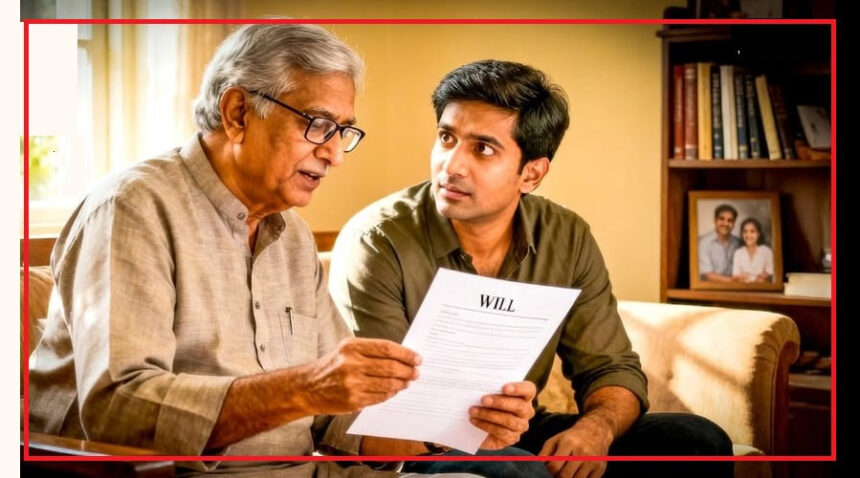
In the Karnataka High Court case, the son was a Christian, and he did not create a Will during his lifetime. Mohanty says that if the son had executed a valid Will, the rules of intestate succession would not apply. Testamentary succession overrides the statutory scheme of intestacy.
Mohanty said: “In such a scenario, the mother would not inherit by virtue of being a ‘legal heir’ under intestate law. Instead, her entitlement would depend entirely on the contents of the Will.”
According to Mohanty, if the Will specifically bequeathed property to her, she would inherit in accordance with its terms. If the Will excluded her, she would have no automatic statutory right to claim a share.
Mohanty said: “While under Hindu intestate succession, the mother is automatically entitled, under the Indian Succession Act, she will be excluded in the presence of children.”
According to Mohanty, a Will allows the testator to consciously determine whether and to what extent the mother is provided for. “The presence of a testamentary instrument ensures that succession reflects the deceased’s considered intentions rather than the default statutory devolution of the estate,” he said.
Reference:- Authored By Neelanjit Das, ET Online | Mar 07, 2026